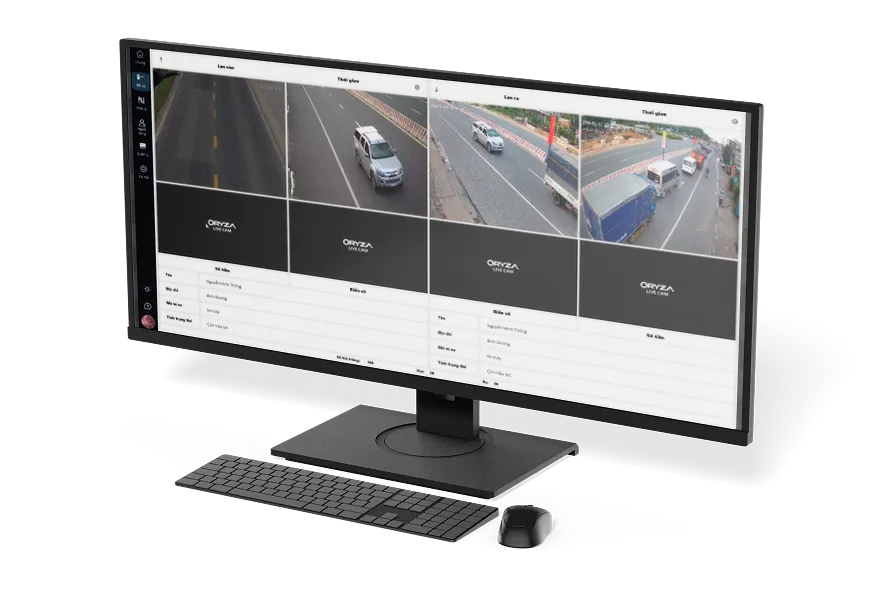
This was a production parking management system deployed in residential and parking-site environments, combining local edge-station operation with a centralized web management platform.
Each parking station operated through a desktop application running on edge hardware such as Raspberry Pi or Mini PC devices, connected to cameras and NFC readers. Operational data was stored locally so the station could continue functioning during unstable or unavailable network connectivity.
When connectivity was available, the desktop application synchronized with the central platform through APIs: it pulled configuration data from the web system and pushed operational records such as entry/exit logs, audit data, and revenue information back to the management platform.
Operational Architecture
The system was organized into two main layers:
Edge station
PyQt/Python desktop application.
Local SQLite storage.
Camera and NFC reader integration for recognition and access workflows.
Continued local operation during connectivity interruptions.
Central management
Web application for remote configuration and operational monitoring.
Pricing configuration, parking logs/audit, and dashboard views.
Data synchronized from parking stations when connectivity was available.
This architecture allowed station-level operations to remain independent from continuous network availability while still supporting centralized monitoring and configuration when stations came back online.
Computer Vision Pipeline
The system used a multi-stage recognition pipeline:
vehicle detection → license-plate detection → character detection → plate reconstruction
Vehicle detection was used as a preprocessing step to crop the relevant vehicle region before plate recognition. After the plate area was detected, a separate model identified individual characters. Character bounding boxes were grouped into rows, spatially ordered, and mapped into the final license-plate sequence.
The models were developed from pretrained YOLO models using train/validation splits and additional camera-based testing. During testing, failure cases such as angled plates were addressed by expanding the training data and applying targeted augmentation before retraining.
My Role & Contribution Scope
My direct contribution focused on three main areas:
Computer Vision model development: prepared and labeled datasets, fine-tuned YOLO models for vehicle, license-plate, and character detection, implemented plate-sequence reconstruction logic, validated models using real camera feeds, and exported models to ONNX for testing with ONNX Runtime on edge hardware.
Edge/hardware prototyping: supported prototype testing between Raspberry Pi devices, NFC readers, and external devices such as barriers and buzzers through GPIO.
Web management frontend: directly implemented Next.js interfaces for pricing configuration, parking logs/audit, and operational dashboards, including responsive behavior, dynamic form validation, Recharts visualization, pagination, search/filter, and image preview.
The NestJS backend, SQLite-to-MSSQL synchronization mechanism, parking-fee calculation engine in the desktop application, and on-site production deployment were implemented by other team members.