1. My First Lines of Code
I started using computers pretty early, but back then it was mostly for gaming. From simple browser games to titles like TDK or 3Q Củ Hành, I spent a lot of my free time in front of a screen.
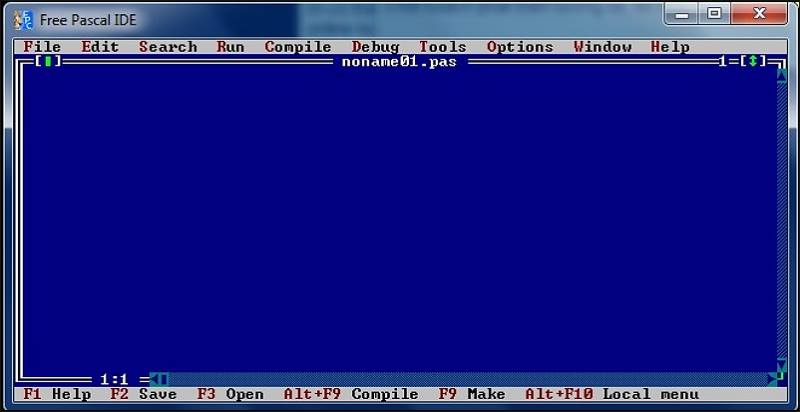
I only discovered programming in high school through Pascal and its old green IDE. That was the first time I experienced the feeling of solving problems with code. Even simple exercises and beginner algorithms felt surprisingly interesting to me.
What made me seriously consider this field was not really “passion for technology,” but the clarity that programming gave me. I could clearly see what I needed to learn, how to improve, and where my current skill level stood.
Compared to many other fields, programming also felt more straightforward. In the early years, I could focus more on technical skills and self-improvement rather than networking or communication-heavy environments.
2. Feeling Lost at the Beginning
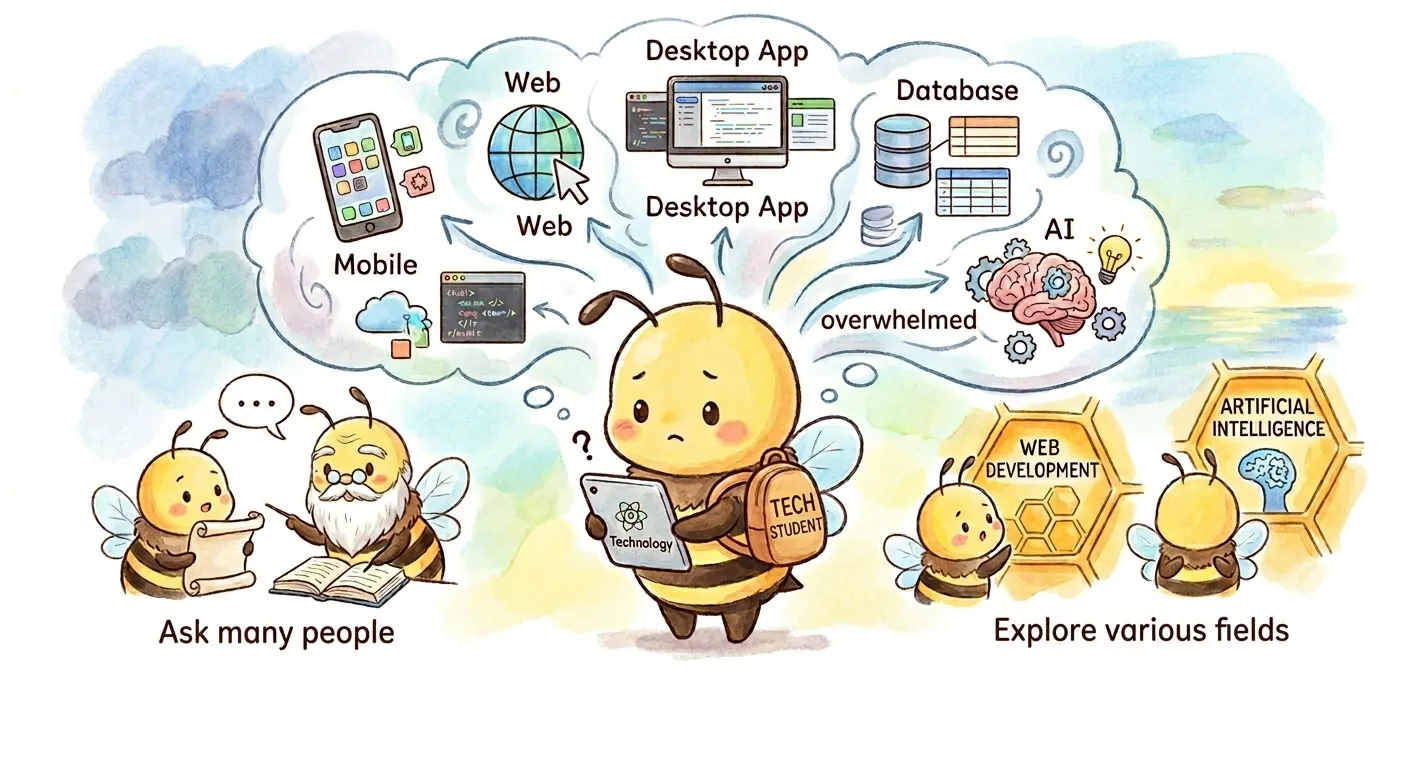
Even though I liked technology, I still felt pretty lost during my first years at university. I did not really know which direction I should follow, what the real working environment looked like, or whether I was actually suitable for this career.
At that time, I spent a lot of time asking people around me for advice and trying different areas like mobile development, web development, desktop apps, databases, and AI.
Looking back, that period felt a bit messy, but it helped me build a broader view of the software industry and understand what I actually enjoyed.
3. Choosing Frontend as a Starting Point
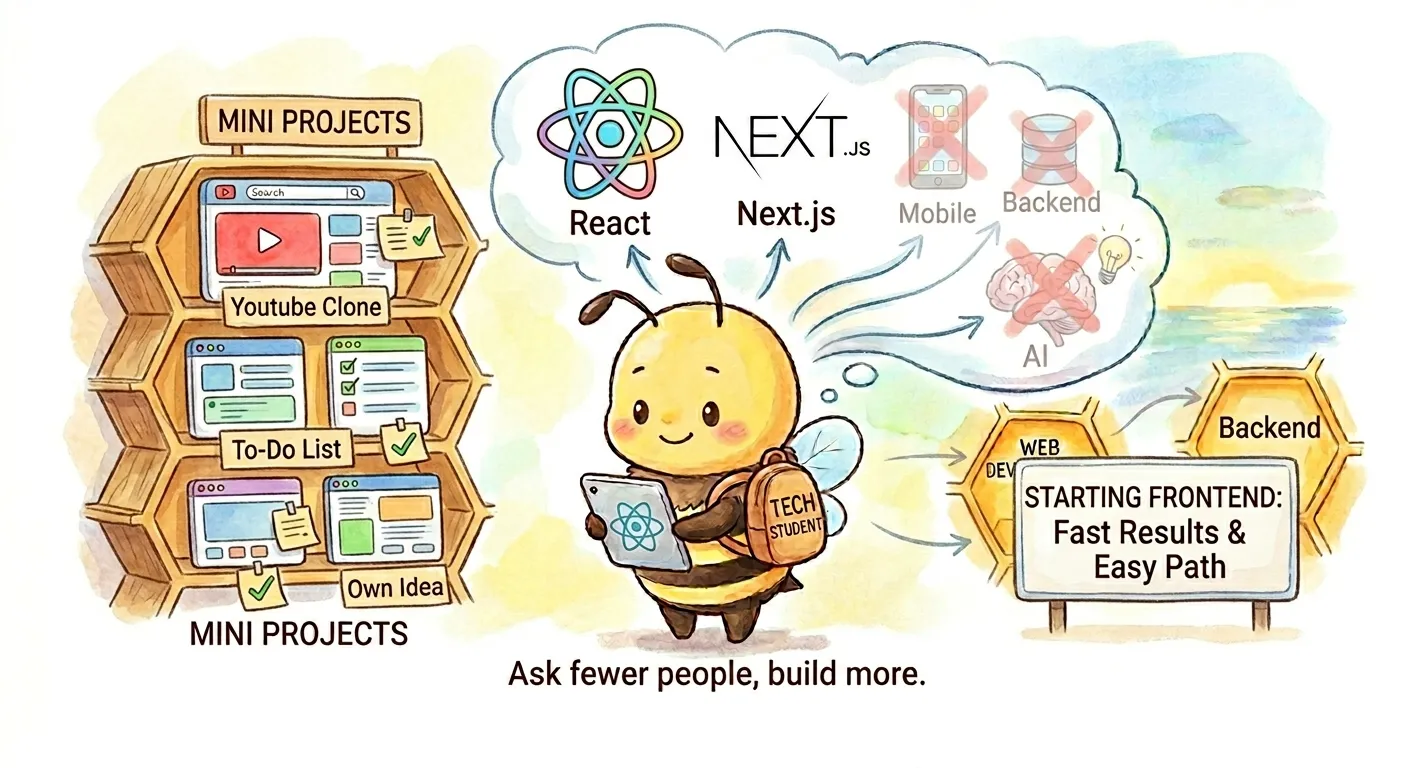
After exploring different areas, I decided to focus on frontend development because it felt more approachable and gave faster visual feedback. The two technologies I spent the most time on were React and Next.js.
My learning style was pretty simple: build many small projects, search for whatever I was missing, and keep fixing problems until things worked. Some projects were inspired by YouTube tutorials, while others were completely self-made.
That period helped me improve a lot in terms of self-learning and problem-solving.
4. My First Job
After graduation, I started my first job as a frontend developer working with React and Next.js. Since I had already spent a lot of time learning and building projects on my own, adapting to real work was not too difficult.
The biggest difference between studying and working was the mindset behind writing code. During university, I mostly worked alone, so mistakes only affected me. At work, things became more serious because code quality, maintainability, teamwork, and real users all mattered.
Outside of frontend work, I also started learning more about backend development to better understand how systems actually work behind the UI.
5. Final Thoughts
Looking back, my journey into programming was not anything extraordinary. Most of it was simply self-learning, experimenting, making mistakes, and improving over time.
Things are also very different now compared to when I first started. AI tools, chat assistants, and coding agents have made learning and accessing knowledge much easier than before. New developers today can move faster if they know how to use these tools effectively.
At the same time, I think the most important things have not changed: the ability to learn independently and the patience to keep improving over time. Tools may help people move faster, but how far they go still depends on themselves.