1. Introduction
When starting your journey into web development, especially for those aiming to set long-term goals such as becoming a full-stack developer capable of handling any technical phase in a web application project, many questions arise.
One of the most common questions is, "Should I start with backend or frontend?" Both are integral parts of web development, yet each comes with its own characteristics, requirements, challenges, and risks. In this article, I aim to help beginners gain a clearer understanding of the two aspects—Frontend and Backend—and provide advice to help you choose the path that suits you best.
2. Front-End: Crafting Engaging User Experiences
The front-end is the part of a website or application that users directly interact with when they visit. It represents the user interface, encompassing all elements like text, images, buttons, menus, forms, and anything visible and interactive within a browser.
The front-end is typically built using three core components:
HTML (HyperText Markup Language): Defines the basic structure of the webpage, serving as the foundation for its content.
CSS (Cascading Style Sheets): Styles and formats the interface, making the website visually appealing and attractive.
JavaScript: Adds flexibility and interactivity, bringing web elements to life and enabling dynamic, responsive behavior based on user actions.
Front-end development merges the art of design with the power of technology. If you're passionate about creating smooth and visually intuitive interfaces, front-end development is where you can unleash your creativity and technical skills. It’s not just about turning design ideas into reality but also about building the bridge for seamless user experiences.
2.1 Advantages of Front-End Development
Immediate Results: Front-end development is highly visual, allowing you to see the results of your code instantly. Every change you make is reflected in the browser, offering a satisfying sense of accomplishment as you witness your finished product.
High Job Demand: The demand for front-end developers remains consistently strong, particularly in web and application development companies. This makes it a great entry point into the tech industry.
Powerful Tools and Libraries: The rise of libraries and frameworks like React, Angular, and Vue.js has made front-end development faster and more efficient than ever, saving time and effort.
Diverse Opportunities: Front-end developers aren't limited to websites; they can also develop mobile apps (using React Native) or desktop applications (using Electron), offering various career paths.
Easy Project Involvement: Joining an active project is relatively straightforward for front-end developers without extensive preparation.
High Creativity: If you're passionate about design and user experience, front-end development is an ideal domain to express your creativity.
Simple Learning Curve: Getting started with front-end development requires mastering just HTML, CSS, and JavaScript, whereas back-end development often involves multiple programming languages like Python, C#, Go, or Java.
2.2 Challenges and Difficulties in Front-End Development
High Competition: As a fresher or intern, you will face intense competition, with many candidates vying for the same opportunities.
Rapid Technological Changes: Front-end technologies evolve rapidly, requiring you to continuously update your knowledge. Falling behind can quickly make your skills outdated.
Risk of Replacement: Without consistently improving your skills, you risk being easily replaced by another developer.
Cross-Browser Compatibility: Ensuring that interfaces work consistently across various browsers can be challenging, demanding a solid grasp of standards and testing methods.
Despite these challenges, front-end development remains a rewarding field that emphasizes design, attention to detail, and creating user-friendly and intuitive interfaces.
3. Back-End: Building a Strong Foundation for Applications
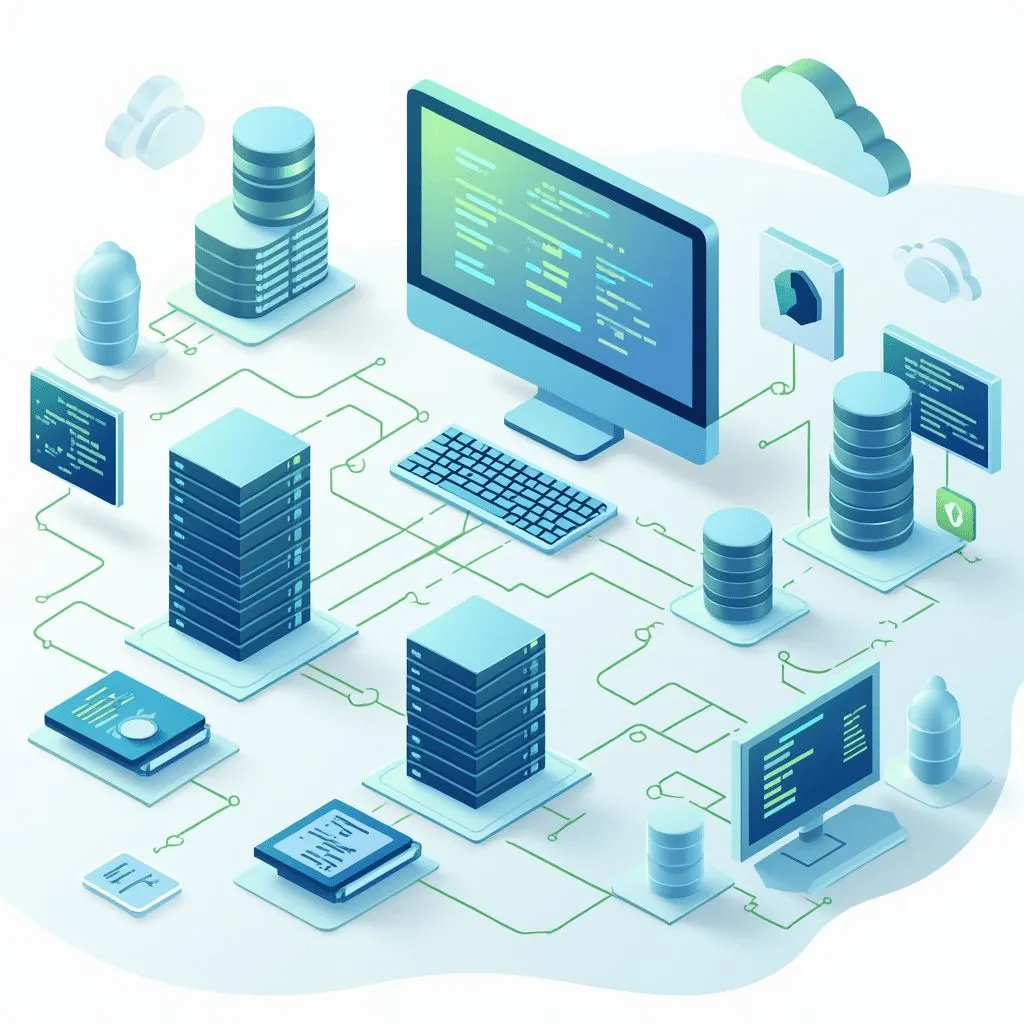
The backend is the part of a website or application that users can't see but plays a critical role in processing data and managing the underlying logic. This is where user requests are handled, databases are interacted with, and smooth operation is ensured. Backend systems are typically developed using programming languages such as:
Python: Widely used in backend development, supported by frameworks like Django and Flask.
Node.js: Enables server-side JavaScript programming, offering flexibility for developers.
PHP: A favored choice for traditional web projects.
Java, Ruby, C#: Other popular options in the backend development space
Backend development offers the opportunity to dive deep into data processing and create high-performance systems. If you have a passion for data analysis, logical problem-solving, and performance optimization, backend development is an excellent field to hone your skills.
3.1 Advantages of Backend Development
Working with Data: Backend development allows you to process data and design system logic, offering fascinating and challenging experiences in managing information.
Understanding How the Web Works: Learning backend development helps you gain a deeper understanding of how websites function, from handling HTTP requests to managing databases.
Stability and Security: Backend requires a focus on stability and security, essential skills for large-scale projects that are highly valued in the market.
Solid Foundation: Backend emphasizes data processing logic and system management. A strong understanding of programming languages helps you build a robust foundation for your career.
High Demand for Jobs: Complex applications always need a powerful backend to handle data and frontend requests. The demand for backend developers is consistently stable and high.
Greater Stability: Backend technologies often evolve more slowly compared to frontend, with frameworks like Django, Node.js, and Laravel having longer and more stable development cycles.
Enhancing Overall System Performance: The backend significantly impacts the responsiveness and processing speed of the entire system. Building efficient APIs and data management systems can greatly improve user experiences.
3.2 Challenges and Difficulties in Backend Development
Handling Complex Data: Backend often involves managing complex tasks like computations, data storage, and queries. This requires deep knowledge of algorithms and performance optimization.
Security: Backend is responsible for ensuring data security, especially in systems that require authentication and data encryption. A lack of security knowledge can lead to critical vulnerabilities, such as SQL Injection and CSRF.
Debugging and Optimization Challenges: Compared to frontend, backend issues can be harder to detect due to the lack of a visual interface. Performance or security problems often become evident only under high system load or during attacks.
Requires Critical Thinking and Foundational Knowledge: Before working on a project, you need to understand how systems function, which demands strong foundational skills and logical thinking.
Managing Large Systems: For complex systems or those with a large user base, managing servers, databases, and deployments can be challenging. This requires knowledge of DevOps, application deployment, and system monitoring.
Abstract Concepts: Learning backend can be harder than frontend because it involves understanding more abstract concepts like databases, APIs, and system architecture.
Despite these challenges, with passion and persistence, you can acquire invaluable skills in backend development that will significantly enhance your career.
4. Should You Start with Backend or Frontend?
Choosing whether to start with backend or frontend depends on your personal interests and long-term career goals. Take time to carefully evaluate your preferences before deciding on the right path!
If you are passionate about creating visually appealing interfaces and enjoy seeing immediate results from your work, frontend development is the ideal choice. In this field, you will develop skills in optimizing user experiences, mastering powerful frontend frameworks, and crafting intuitive and engaging products.
On the other hand, if you’re interested in data analysis and solving complex system-related problems, backend development is your playground. It allows you to work with databases, gain a deep understanding of how systems function from the inside, and build robust foundations for applications to run efficiently.
For those aiming to become full-stack developers, mastering both frontend and backend can make you versatile and open up numerous career opportunities. However, it’s wise to start with one area, build a solid foundation, and then expand into the other later.
5. Conclusion
Whether you choose to start with backend or frontend, the most important thing is to stay persistent in learning and practicing. Both fields offer significant career growth opportunities, and if you truly enjoy programming, you’ll find excitement and challenges wherever you go. Choose the path that aligns with your interests and personal goals.
Wishing you success on your programming journey!